
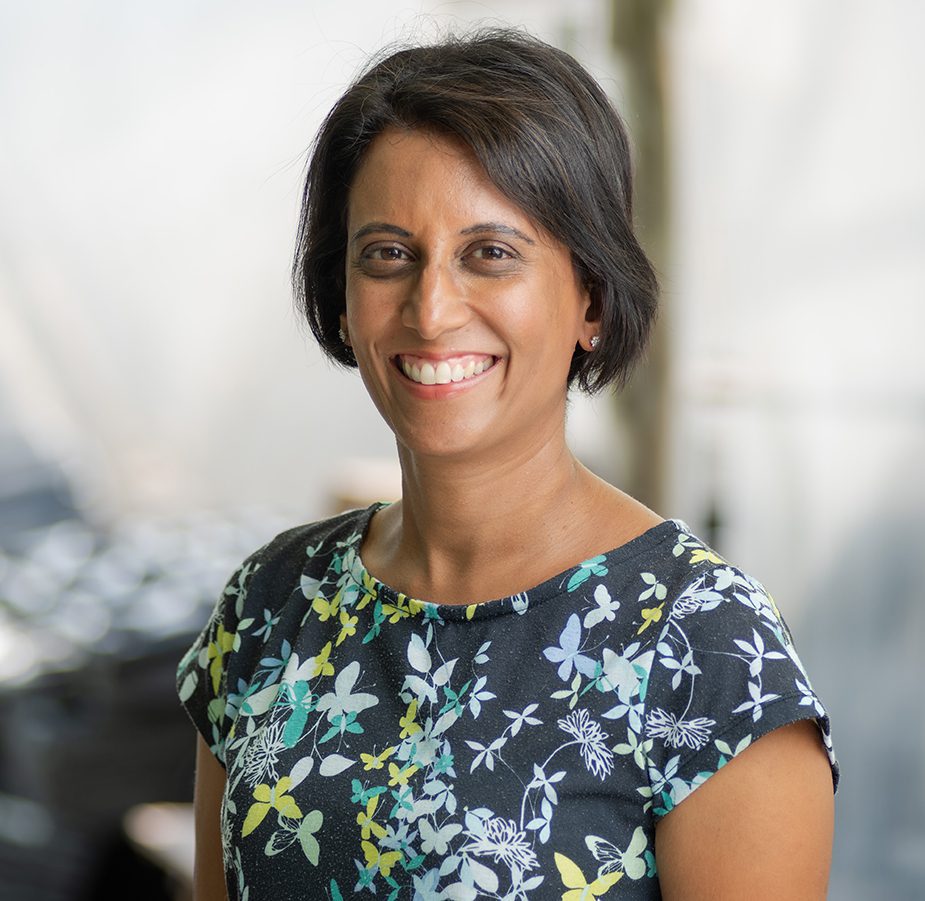
A decade ago, I had the privilege of becoming the first CEO of Power to Change. At that point in January 2015, it was me, a laptop, a new board and a handful of talented consultants helping to build the organisation from scratch. We had four months to launch our first funding programme which we did, and the organisation has since gone on to flourish and deliver real impact for community business.
I bowed out of the Power to Change story three years ago when I left to join Keir Starmer’s team. Although I loved Power to Change, I had become a bit frustrated at my inability to connect all the small examples of change we were creating across the country into one big shift in how things get done. Now I had the chance to move somewhere where big change was possible, or so I thought. Three years and one election victory later, I have learnt a lot about creating change and have a new found appreciation for the community business approach.
In the very early days of my time in the Leader of the Opposition’s Office, a by-election was called in Wakefield. I was excited that one of the visits Keir Starmer was due to do was to a community hub in the town, one that Power to Change had supported. I called up Bernie, the manager, expecting to find a similar level of excitement on the other end of the phone. Not so much.
Bernie was nonplussed, bordering on angry. No one from the Labour Party had spoken to her for years or shown any interest in her organisation and its work. Now she was supposed to roll out the red carpet because the Party Leader wanted to visit. Bernie was a Labour member. Her disdain didn’t come from different politics but from the transaction Bernie was being presented with. What she wanted from politics was a relationship, an ongoing conversation.
A network of relationships
Community businesses are more than organisations – they are a network of relationships. This is what gives them their power in changing the places where they are based. They trade first and foremost in trust. It’s the reason why they can get so far with volunteers in the way most businesses couldn’t. It’s the reason why board members will dip into their own pocket to keep them afloat, and why they can reach people in their community that other organisations can’t.
The Bevy in Brighton rather counterintuitively runs public health initiatives out of a community pub. The relationships it has with local people mean they will accept help and advice there – but not somewhere more ‘official’.
Politics and government undervalue relationships. They engage sporadically with people, often on their terms and without reciprocity. This breeds mistrust and misunderstanding. Of course, not every problem government tries to fix is relationship-based. Some, like reducing waiting lists, are relatively mechanical. Find the interventions that work and make sure all hospitals implement them. However, many of our toughest challenges, from ex-offender rehabilitation to reducing obesity depend on behaviour change and that is where trusting, long term relationships matter most. This is not a new insight. Far from it.
The brilliant David Boyle, who sadly died recently, wrote about relationships being at the heart of public services many years ago and David Robinson has championed relationships for years. And yet, too little has changed about how the state interacts with its citizens.
Built on what is, not what’s missing
In 2023, my worlds of community business and politics clashed again. This time Keir Starmer and Yvette Cooper were going to visit Sacha Bedding in Hartlepool. I had got to know Sacha well as the organisation he runs, Wharton Trust, got a £1m grant from Power to Change over five years to change the Dyke House area of Hartlepool. However, when the Labour Party arrived in Dyke House, it wasn’t the positive work that was going on that was the focus. It was the anti-social behaviour and crime, the broken windows and graffiti. We had missed the point.
Dyke House was full of incredible people working together to change their community, supported by community leaders like Sacha. We had missed all this and only seen the problems.
Community business starts from what there is, not what is missing. It’s a fundamental difference from how government sees communities. And Labour governments have a bigger problem here than most. Labour’s deep-seated concern for social justice and fairness can leave it overly focused on disadvantage and discrimination. These matter profoundly but communities want to deal in aspiration and ambition. Too often we level down when communities want to be lifted up.
I will never forget my first visit to Safe Regeneration in Bootle, Merseyside. Brian Dawe, its brilliantly charismatic leader, took me to a piece of waste ground by the canal and said, ‘Vidhya, in a few years this is going to be a piazza’. It would have been easy to laugh. There was fly tipping and drug paraphernalia and not much else. But his conviction was infectious, and I left believing him. A decade on, the area has been transformed. Not only is there a piazza; there’s a community pub, a music festival and so much more.
I could tell the same story about Jess Steele and the Observer building in Hastings or Wendy and Hannah at Nudge Community Builders in Plymouth. Time and again, I saw the same thing: ambition that seemed almost outlandish delivered by incredible people working with their communities, building on what was there, not focusing on what was missing. Government must take a leaf out of this book and become a partner to this sort of ambition and aspiration, not just the provider of a safety net for people.
Backing network leaders who make things happen
What’s most inspiring about community business is the people – the leaders who make things happen. Not hierarchical, but network leaders who connect and empower others to deliver real change on the ground. Over time, it became clear that the most impactful thing Power to Change could do was back these leaders – not fund one project, but back them again and again to accelerate the change they deliver. I left Power to Change before fully realising this vision of how funding and support could work best.
Whether in community business or Silicon Valley, it’s all about people. Venture capital backs people, much as I had come to realise that I didn’t need endless new funding programmes. It might be grassroots and purpose driven, rather than the next tech innovation, but ultimately it’s about spotting talent and backing it. You need to be mindful of your biases and blind spots with this sort of approach but if you value outcomes over process, there isn’t a better way.
This approach is almost entirely missing in government. Government backs programmes, not people, and despite years of learning continues to make applicants jump through endless hoops to get support. Track record – and what you delivered with the last round of government funding – counts for little. With each new programme, you start from scratch.
Community-led solutions
Three years on, I realise where my frustration had come from. It wasn’t that I couldn’t stitch together the individual community businesses I knew across the country into bigger scale change. It was that those I was trying to convince, namely government, had missed the point. Too often, government is looking for one answer to a problem that it can scale; the perfect pilot that can make a difference everywhere. It still sees change as an industrial process.
Community business is an organic solution to social change where innovation springs up in communities led by incredible entrepreneurs. It is rightly different everywhere and fits the needs of the people and place where it is born. This type of change still needs government to thrive, but not in the way in which government feels most comfortable. It needs government to embrace difference, remove barriers and enable communities to find their own solutions, spreading rather than scaling what works best.
Long before Power to Change, I was sitting in a roundtable with the then Leader of the Opposition. One of the participants had just told him about a diabetes walking group in Bethnal Green that was very effective. He immediately said, ‘How do we roll that out to every community’. This is precisely the wrong instinct. We must shift to a new question: how do we enable each community to lead and deliver the change it needs?
Vidhya Alakeson is Deputy Chief of Staff to the Prime Minister, and was Chief Executive of Power to Change from 2015 – 2022. She writes here in a personal capacity.


