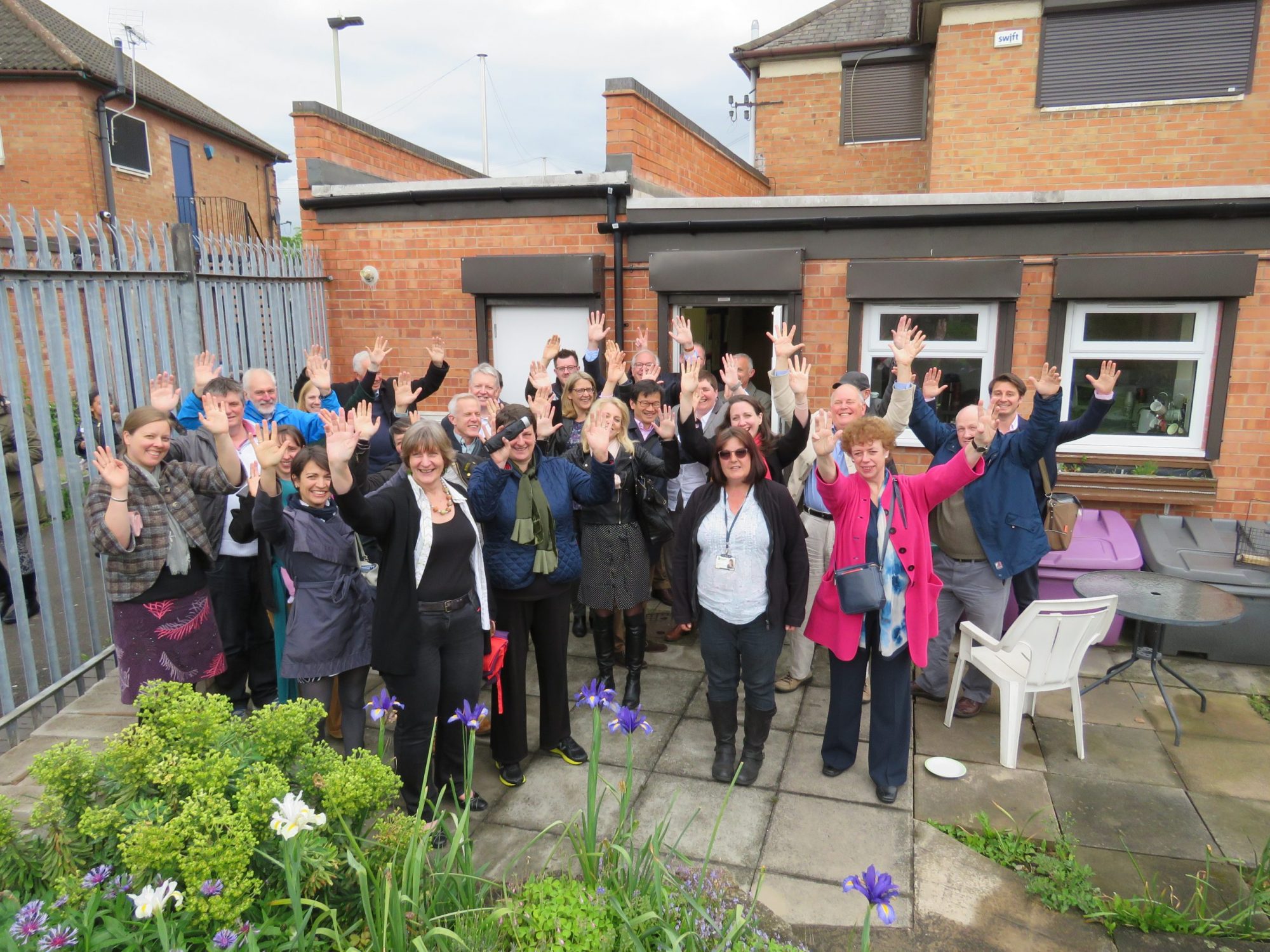
These are just some of the kinds of community businesses facing higher business rates bills, as revealed by our latest Pulse Survey.
The upcoming changes
From April 2026, the business rates revaluation will come into effect. The government is setting lower multipliers (used to calculate business rates) for retail, hospitality and leisure venues, which can reduce the overall bill, and has recently announced an additional 15% relief for pubs and live music venues.
However for many properties increases in rateable value may outstrip any reduction in multipliers, pushing bills up rather than down.
To mitigate this, the government has introduced supporting small business relief, for businesses who have lost other forms of relief and whose bill will increase in April.
Community businesses rely heavily on business rates relief – but only 11% access retail, hospitality and leisure relief
Of the community businesses surveyed, 71% run at least one building or asset. Most receive some form of business rates relief: 38% use charitable rates relief, 19% small business rates relief, and 16% discretionary rates relief via their local authority.
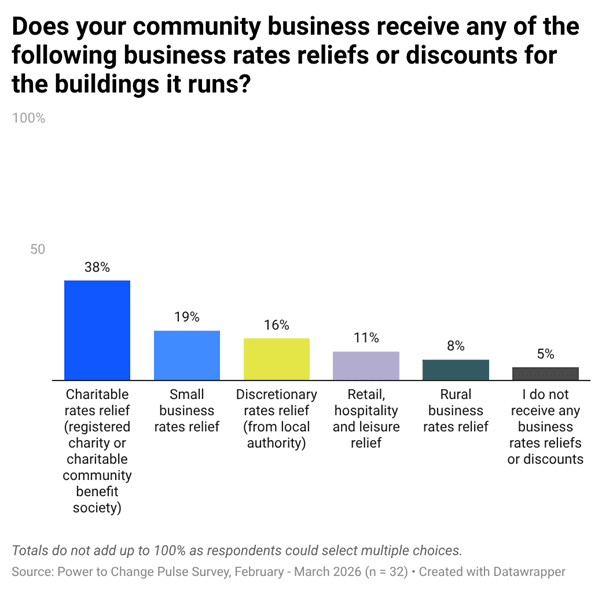
But access to relief is inconsistent. Community businesses operate under a wide range of legal forms and relief eligibility varies, particularly for non-charities or businesses occupying larger spaces.
Strikingly, only 11% receive retail, hospitality and leisure relief, and therefore will not benefit from the substantial support the government has built in for these sectors.
With trickier access to relief, and limited eligibility for the additional support offered to pubs and music venues, rates revaluation means over a third of community businesses may soon face rising bills they cannot afford.
Awareness of rates changes and supporting small business relief is low
Over half (53%) were unaware of the business rates revaluation, and one in five did not know how the changes would impact their business rates bill.
The majority (58%) had also not heard of supporting small business relief, and two in five were unsure of their eligibility for this relief.
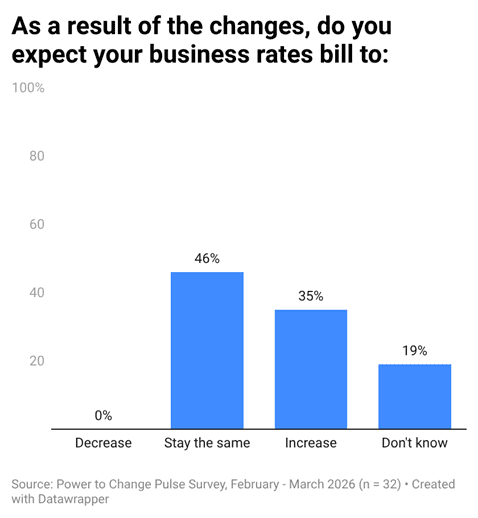
Once we shared guidance on how to calculate their future bill, over a third (35%) expected their bill to increase. Based on estimates three community businesses provided, their future bills will rise by an average of 44% – compared with 30% for public houses/pub restaurants. In one case, their bill is expected to go from nil to £5000 per year.
Although two in five can apply for supporting small business relief, a substantial minority (15%) are not eligible.
Community businesses are ‘nervous’ and ‘scared’
Concern is high among the community businesses facing bill increases. Several noted their already financially precarious positions; our previous Pulse surveys have shown community businesses, alongside other small businesses, have long faced challenges with rising labour and energy costs.
- ‘The scale of the rateable value increase is far too high; the uncertainty about future increases of this scale will make it more difficult for us to attract a new tenant.’
- ‘Taken to the extreme small businesses will close as is being witnessed by pub closures.’
- ‘We pay business rates on our village hall, income from hire only covers a small part of the overheads and so community fundraising has to cover the difference. Increases in rates for community spaces […] makes the viability of these critical services increasingly difficult.’
- ‘We benefit hugely from 100% relief and any change would be negative to our bottom line and hence our operations.
Community businesses will be hit, and our high streets will feel it
The government’s plan to ease the tax burden on retail, hospitality and leisure, while welcomed, means many community businesses are being left behind, limiting their potential to transform local areas, high streets and town centres.
Community businesses are more likely to operate in England’s most disadvantaged places, creating local jobs and volunteering opportunities and keeping wealth retained locally. In these areas, retail spend has plummeted but an oversupply of retail space means high streets are often left shuttered up.
But at least two fifths of community businesses have contributed to high street regeneration, often through reoccupying these vacant retail units and turning them into lively community facilities.
Through our Community Led High Street Innovators project, we’re working with community businesses who are transforming their high streets and town centres. Make CIC have transformed a former office building into a thriving maker and community space in Birkenhead, while the Arcade Group in Dewsbury are reviving a listed town-centre shopping arcade after a decade of closure.
Most community businesses don’t offer just one service. They act as hubs, support services and affordable rental spaces for local tenants, multiplying their social and economic impact. They are civic spaces that build connection, cohesion and collectivity. They offer a sustainable, long-term alternative to the outdated retail-focused high street that no longer serves local communities.
Yet many are telling us they cannot withstand another rise in business rates, or cannot get started at all. In 2024, three in five community businesses told us that barriers such as higher business rates on high street locations prevented them from taking on vacant sites.

A high street built for communities
A thriving high street isn’t just pubs, shops and retail. It’s mixed-use, purpose-led spaces that serve local communities.
It’s positive to see the government’s latest commitment of £301 million for High Streets Innovation Partnerships recognise the need not just to revive, but to reimagine the nation’s high streets. This vision of a future high street with renewed civic purpose and a mixed-use offer that meets the changing needs of communities is something we have consistently called for.
However, while this long-term ambition is welcome, community businesses are braced for renewed pressure from changing business rates. As forthcoming high street reforms take shape, community businesses need support to meet these challenges and recognition of their essential role in bringing, and sustaining, life on the high street.
Our fourth survey was carried out between 2 February – 2 March 2026 and had 40 respondents. The online survey was sent to our mailing list of community businesses who had either applied for our grants or previously worked with us. The results of this survey are not representative of the views of the entire community business sector.