The declining state of Britain’s high streets has been the subject of significant public and political commentary. Power to Change’s own work on this topic has focused on the challenges posed by rising vacancies and increasingly dilapidated town centres (including the political challenge it poses) and the potential for communities to shape solutions and give empty high street buildings new life.
The state of the high street is a highly visible indicator of local prosperity or decline in every part of the country. High streets shape everyday experience, anchor local identity, and serve as a barometer of whether national promises of renewal are being delivered. As a result, the condition of the high street is an ever more salient political issue. The government now needs a credible offer on the high street that will show the public – sooner, rather than later – that the state of things is getting better.
The new year has brought another flurry of new commentary, like John Harris’s piece in the Guardian earlier this month which picked over the wreckage of the high street in search of hope, and Polly Mackenzie’s Substack essay ‘How do you solve a problem like the high street?’, prompting our team to get together for a discussion on the policy solutions to this seemingly intractable problem. With the news this week that the government plans to publish a High Streets Strategy, here I bring together our thoughts about how the government can put forward a credible response to the crisis of the high street and the ideas that are inspiring us. Simply put, this needs to go much further than just changing the conditions in which retail, hospitality and leisure businesses operate.
The problem drivers
The reasons why our high streets are in such a state have been extensively documented in our work and that of many others. In brief, changing patterns in how and where we shop have led to a surplus of retail property and increased vacancy in our towns and high streets. Retail closures have had a knock-on effect for other local businesses that depended on the footfall, and our increasingly shuttered high streets have seen rising anti-social behaviour and visible physical decline. Diminishing returns for property owners mean some would prefer to sit on the land value of their property than fill it, and a lack of transparency about who owns our high streets has prevented accountability for those who leave the high street to crumble. Meanwhile, challenging economic conditions make it difficult for those who do want to do business on the high street to stick around – not least through coming increases to business rates and the hike in employer National Insurance Contributions.
Tackling the issue
Governments have already expended considerable political and fiscal capital trying to stop high street decline. The Conservatives’ Future High Streets Fund sought to adapt town centres with falling retail demand by supporting new homes and offices, while High Street Rental Auctions, conceived under the Conservatives and implemented by Labour, have aimed to bring long-vacant properties back into use.
More recently, both parties have framed high street policy as part of a wider regeneration agenda for some of the most disadvantaged places, culminating in Labour’s new Pride in Place programme. Pride in Place is rightly long-term in outlook, recognising that rebuilding trust, relationships and local control takes time. To make a serious intervention on the state of the high street, the government needs an offer that can be applied in towns and high streets around the country – not just in a handful of (albeit the most in need) places.
Many of the solutions now proposed to fix the state of the high street focus on addressing the visible, tangible signs of local decline, and reinvigorating the high street economy to make them busy and thriving again. To date, the government’s attempts at the latter have centred on changing the business rates system to support struggling pubs, shops, and music venues. But to ensure the long-term sustainability of any investment in the high street, we must also confront the need for a new long-term vision for the high street, and tackle the structural issues that are preventing even more prosperous high streets from really succeeding – like a business rates system that disproportionately impacts those trying to build back their high streets.
As part of its efforts to restore pride in place, government needs to address the deep roots of the challenges of our high streets and their implications for the economy, places, and civic life. In doing so, it must also strike a balance between short-term, visible interventions that restore confidence and signal momentum, and the deeper structural reforms needed to secure the high street’s long-term economic renewal.
So, in our view, the government needs to – quite quickly – implement measures to:
- Fix the state of the most problematic buildings and other physical markers of decline– the things that keep the high street empty and people away from it.
- Stimulate the high street economy – by creating the conditions for businesses to thrive there, and for consumers to spend their money.
And at the same time, begin the longer-term, more structural work to: - Articulate a new vision of what the high street is used for and how we experience it – be honest about the structural issues facing high streets and build consensus for a new, more diverse economic model.
By fulfilling the first two, a government can secure the political headroom to pursue the root and branch reform that can bring a new economic model for the high street into being.

Tackling empty buildings and improving the physical realm
Empty and dilapidated buildings are both a symptom of high street decline and can aggravate it further. Addressing the spaces that most dent local pride, and opening their doors again, can be a measurable sign of progress.
There are numerous proposals on how to do this. Polly Mackenzie set out a proposal for a Troubled Buildings Programme, which would focus on those small-scale sites typically passed over by both private developers and local councils, and therefore prone to chronic vacancy and dilapidation. Attention to sites at this scale would enable communities, SMEs and local investors to meaningfully get involved – helping to create wealth that stays in the local economy.
In Places to Come Together for IPPR, Sacha Hilhorst proposes the creation of a 21st-century Welfare Fund. Drawn from modest taxes on the spaces or the sales of online retail giants, the fund would bring iconic local buildings back into community ownership as anchor institutions for the everyday economy, like colleges or childcare provision, helping to move our high streets towards becoming multi-purpose civic spaces.
Power to Change has also explored models for the community-led transformation of empty and neglected buildings. Communities often struggle to get a foothold on the high street because they struggle to access money at the scale and pace that for-profit developers can. In 2022, this led us to propose a High Street Buyout Fund – an agile investment vehicle that could purchase key assets on the high street and transfer them into community ownership, over time and with support. There’s still a pressing need for this sort of fast-acting fund to help communities get a foothold on the high street. With government now exploring how it can build partnerships for social impact through the Office for Impact Investment, it may finally be possible to make this sort of investment a reality.
Of course, it’s not as simple as sprucing up a few buildings. In many places, the assets most in need of renewal are whole shopping centres or department stores that have been surpassed by out of town retail, or vacated by the decline of brands like Debenhams and BHS but we still lack a coherent logic for what to do with these buildings when these brands disappear from our high street. As well as supporting the reoccupation of already empty buildings, it would benefit the government to think about the use of these types of spaces before the next big retailer closes its doors.
Stimulating the high street economy
Alongside tackling the physical state of the high street, government should be making a targeted intervention to stimulate the high street economy, to stimulate use and spending and create sustainable business conditions.
This could focus on businesses themselves or consumers. Business-focused proposals, such as targeted use of enterprise zone-style powers to kickstart the high street economy. On Substack, Jack Shaw recently proposed giving councils powers to accelerate the densification of their high streets through High Street Development Zones. Late last year, I wrote about applying the logic of investment zones to the high street to help communities deliver growth through Community Investment Zones, through special time-limited incentives like business rates and National Insurance relief or access to capital to develop new ventures for the high street.
Initiatives like the Kingston Pound have encouraged people to invest in local and small businesses, to keep more of their spending power in the local economy while ‘Eat Out to Help Out’ style initiatives, like a ‘Pay for Your Pint’ scheme, would aim to boost polling numbers while getting the public out of their homes and spending. If it doesn’t want to subsidise our pints, perhaps the government could subsidise our travel: in 2023, Western Australia’s Labour Government offered a summer of free public transport in and around Perth to encourage people to spend with small businesses and to provide cost-of-living relief.
Of course, getting people to spend locally also means ensuring they have the disposable income to spend in the first place. As such, we need to start to think bigger. Any direct stimulus should be used to pave the way for serious modernising policies that span the work of government from employment to housing to tax reform. But before it can make these deep (and sometimes difficult) changes, the government needs a compelling reason why.
Articulating a new vision for the high street
As many of these ideas make clear, a sustainable future for the high street cannot depend on retail alone. A 2024 House of Lords report called for a ‘life beyond retail’, reflecting a growing vision of a mixed-use high street anchored by ‘experience-led ’ businesses, increasing public service delivery and bringing housing to the high street. This emerging civic vision is already showing results and offers grounds for optimism. But is this growing sense of the future high street something that’s understood beyond policy circles – by the nation’s businesses and voters?
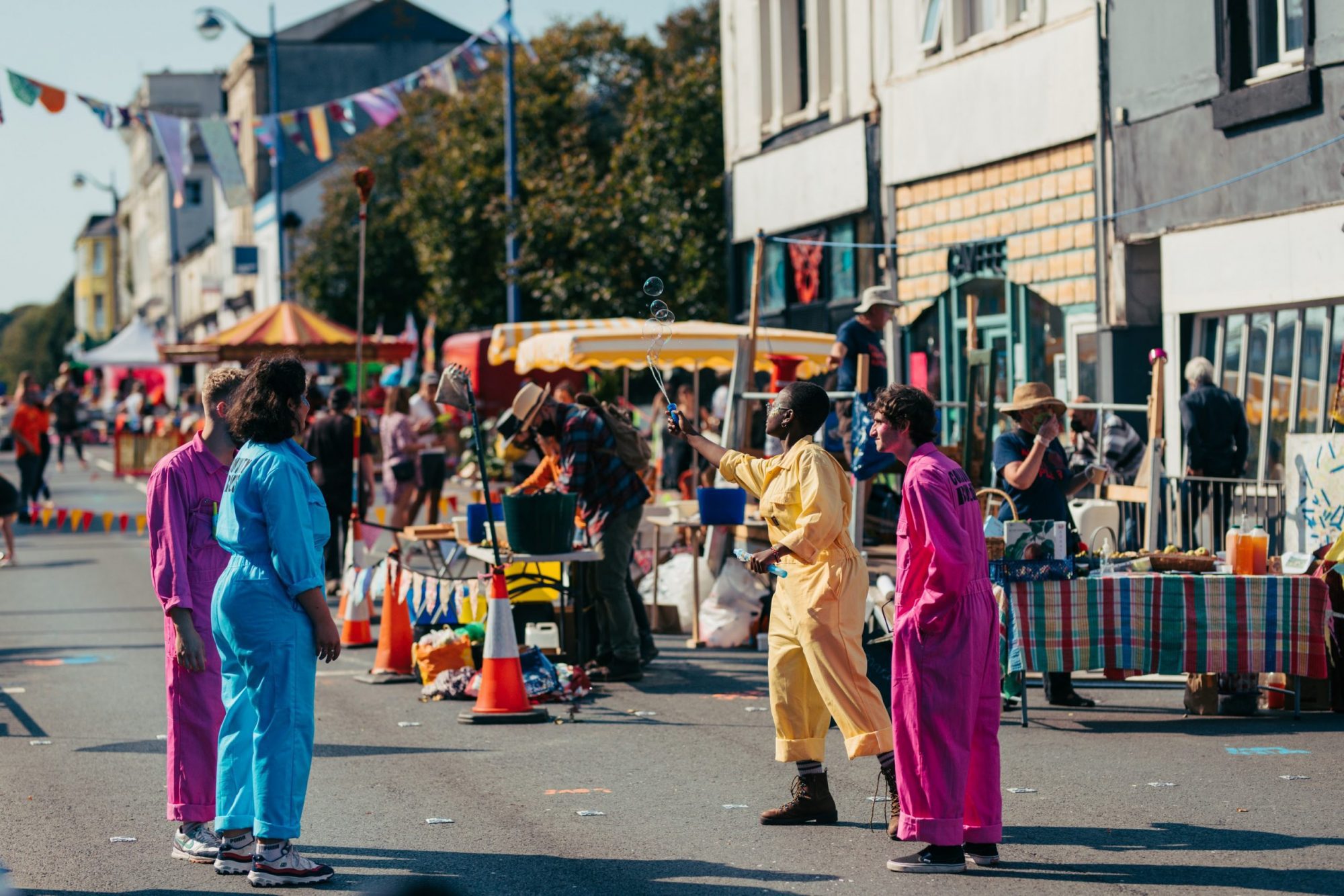
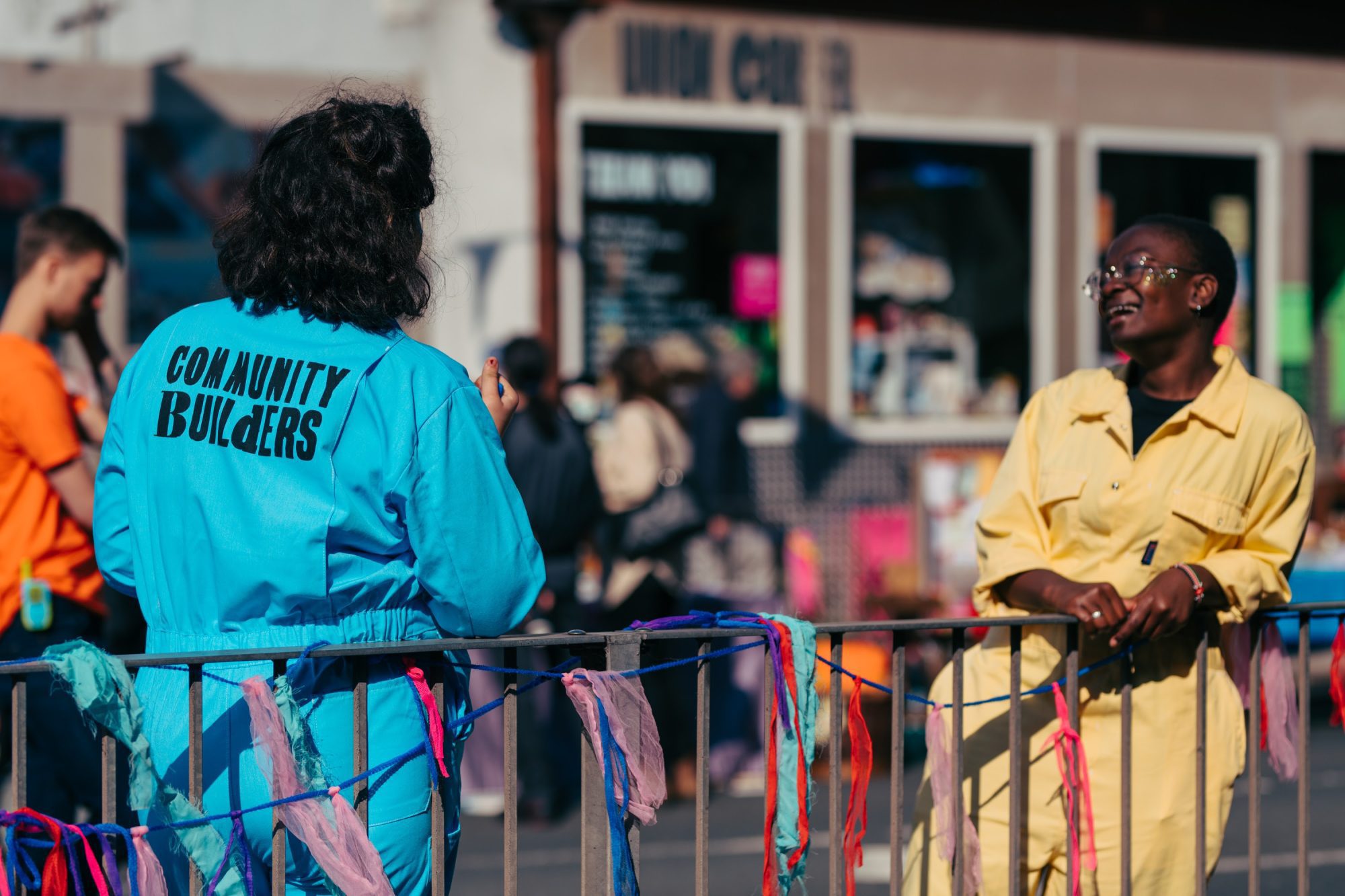
Delivering high streets fit for the future will require action from the private and public sectors, as well as communities themselves, but to build momentum and, crucially, the backing of voters, the government needs to be a leading voice in advancing it. What if Keir Starmer told this story to the nation? He could acknowledge that yes, the high streets we once knew have changed for good. But he could also tell the public about the visionary work already underway, by organisations like Nudge Community Builders in Plymouth, leading the community-powered transformation of Union Street. And he could help us imagine futures not yet come to pass, where our tech innovators are tempted back from Silicon Valley by the offer of affordable workspaces in former retail space, accessible town centre healthcare, and a pipeline of local talent from the nearby college. Or where small-scale grocers, who know what their customers want and know their names, are competing with out-of-town supermarkets and derisking supply chains in the process.
This vision for the future high street will have to be big, bold, and aspirational to cut through the sense of decline. But it also needs to put communities at its heart, so people understand this transition and feel part of it.
A strong vision would also create space for government to pursue the hard but necessary structural reforms needed to sustain a new high street model, including more radical business tax reform. Despite a manifesto pledge to ‘replace the business rates system’ to rebalance the tax burden between physical and online businesses. So far, however, reforms have been limited. A fundamental rethink could explore alternatives such as land value or turnover-based models, while also prompting a reassessment of how we tax the vast profits of online corporations like Amazon – profits that largely leak from Britain’s towns and high streets.
This, then, is our proposal for a High Streets Strategy that deals with the deep roots of the challenges of our high streets, and delivers solutions that can restore public confidence and galvanize further action: tackle visible signs of local decline in ways that empower communities; stimulate high-street economies so businesses that choose to operate there can thrive; and craft a compelling vision that enables long-term, anticipatory policymaking rather than reactive fixes.
But this agenda also needs clarity of purpose. It is not only about economic reinvigoration – though growth obviously matters – but about restoring local pride and identity, and rebuilding trust that government cares and can deliver in the places that shape everyday life.