
In the UK, 84% of people feel they have little or no control over important decisions affecting their neighbourhood and community. That’s a striking statistic, and one that raises two simple questions. First, how did we get here? Second – and more importantly – how do we change this, not in some imagined future, but in the places people live today?
For decades, communities have found themselves on the receiving end of decisions made elsewhere. They may be consulted, invited to respond to proposals or asked for feedback, but too rarely do they have a meaningful role in shaping decisions from the outset.
What if that relationship looked different? What if residents, community organisations and public authorities worked together as partners, sharing responsibility for understanding local challenges and shaping local solutions?
In Market Drayton, a rural market town in Shropshire, a glimpse of a new way forward is emerging. This was the first pilot of a Community Covenant – experiments in neighbourhood-level power-sharing agreements, where local authorities work directly with communities to share power, allocate resources, and make decisions about the future of their local area, together.
At the end of year one, the experience of Market Drayton offers encouraging evidence of what becomes possible when communities and councils work together as equal partners.
Three key lessons from Market Drayton
Our evaluation of the Market Drayton and Rural Parishes pilot identified three headline findings.
First, community covenant partnerships can deliver tangible outcomes. In Market Drayton, the partnership moved beyond discussion and helped establish a new Community and Family Hub that is already providing practical support to residents.
Second, shared decision-making can help build trust. Participants described stronger relationships between community organisations and local authorities, greater openness, and new routes for residents to influence decisions affecting them.
Third, the pilot suggests that trusted, locally rooted community businesses may have an important role to play in convening partnerships and creating the conditions for meaningful power-sharing.
From ambition to impact
The Market Drayton pilot was the first community covenant partnership of its kind in the UK. From the outset, its ambition was to create more than another forum for discussion. It sought to bring together local people, community organisations, Shropshire Council and the town council as equal partners, where priorities could be explored collectively and decisions shaped together.
The pilot operated with relatively modest funding and a single part-time coordinator working less than one day per week. Yet despite these limited resources, the partnership was able to move from conversation to action in a short period of time.
One of the partnership’s most significant achievements is the creation of a new Community and Family Hub. What began as a shared conversation about local needs developed into a practical response that is now supporting residents across the town. Since opening its doors in April, the hub has provided advice and guidance on a wide range of needs, such as navigating housing and welfare support; health services such as free blood pressure checks; and practical help with applying for bus passes or blue badges. The hub also provides a welcoming space where people can come together, share concerns, and talk with local councillors.
While the hub is a visible example of what the partnership achieved, our evaluation suggests some of the most important outcomes were relational. Participants consistently described stronger relationships between the community and the council, increased trust, and confidence that local voices could genuinely influence decisions. As one member of the Covenant Partnership said:
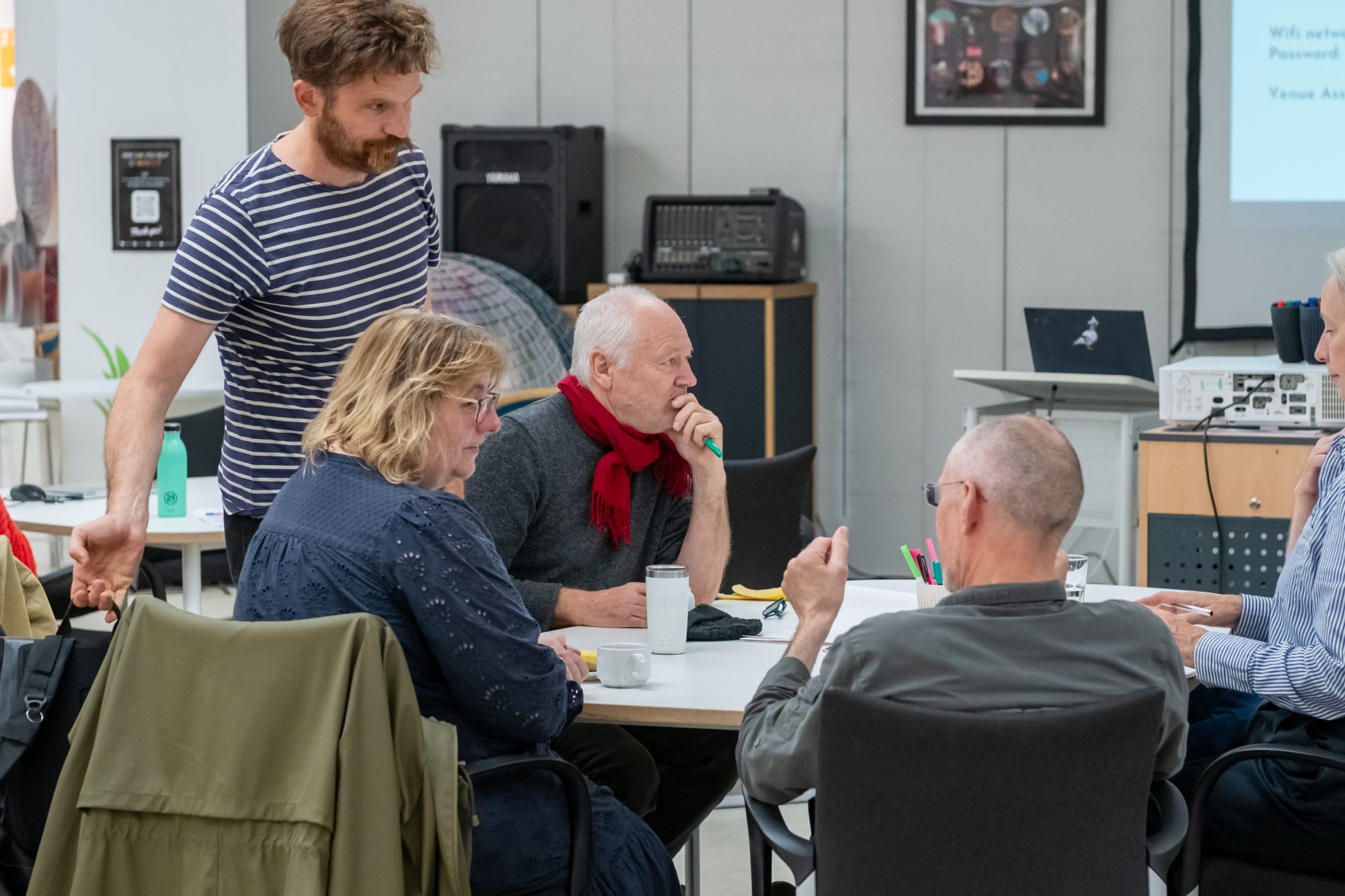
“Everybody gets a chance to speak. We’re very open with each other. We know it’s a safe space. We all feel very comfortable chatting away and sharing ideas. And we’re very respectful of everybody’s points of view.”
Trust and transparency
This greater level of trust did not emerge overnight. Several participants described initially being cautious about working alongside local authorities. What helped shift those perceptions was a commitment to openness, transparency and honest dialogue throughout the process. Participants repeatedly highlighted the role played by Melanie France, Public Health Principal at Shropshire Council, and her willingness to engage with community partners as equals.
“I think there’s a lot of trust that’s been built throughout the meetings between the community and Shropshire Council, and there’s been a desire to get things done.”
Over time, this created a different dynamic. Knowledge was shared more openly, disagreements became easier to navigate, and participants developed a stronger sense of shared responsibility for doing what was right for the community.
The result was what might be described as a virtuous circle. Better relationships supported better delivery. Better delivery strengthened trust. Greater trust then created the conditions for deeper collaboration.
The role of community business
The success of the Market Drayton pilot cannot be explained by process alone. One of the most significant findings from the evaluation was the role played by Fordhall Farm and its co-founder, Charlotte Hollins, who acted as the partnership’s coordinator and convenor. Through years of working within the community, the organisation had built the relationships, trust and local insight needed to bring different people and organisations together around a shared purpose.

Having established England’s first community-owned farm – which involved bringing together the local community to raise £800,000 in community shares to save the farmland from private developers – Charlotte also brought willingness and confidence to try a different approach.
As one member of the partnership explained:
“I think also what [Charlotte] brings is a lot of knowledge about what’s out there to enable us to think outside the box. Because she’s also a self-starter with her company. So, she has been through that, you know, ‘This is impossible. No, it isn’t. I’m going to see what is out there and do it’. And I think that’s another thing that she brings is, you’re not in the box, anything goes, you know.”
While this is only one example, the experience of Market Drayton suggests that community businesses can help make decision-making more informed, relational and grounded in local realities, particularly when they are trusted by both communities and public institutions.
From promising pilot to lasting change
Alongside these reasons for optimism, the pilot also highlights an important challenge. Much of what made Market Drayton successful depended on individuals and organisations being willing to work differently. Community leaders invested time in building relationships. Public sector partners shared influence and engaged openly with community organisations. Together, they created a culture that enabled meaningful collaboration.
The challenge now is to understand how these conditions can be embedded more systematically. If Community Covenants are to become a lasting feature of local governance, success cannot depend solely on finding the right local champions or the right local circumstances. Instead, we need to understand how resources, governance arrangements and institutional incentives can support shared decision-making as an everyday act of sharing power, across the many issues – large and small – that affect our lives.
If we can achieve that, the last mile of devolution – not just devolution to mayors and regions, but down to the community level – becomes something more than a political proposition.
What happens next?
We are now expanding the Community Covenants Test and Learn Partnerships to other parts of England, to communities with different histories, assets and challenges. Together, we will continue exploring how shared decision-making can build community power, improve local outcomes and strengthen relationships between communities and public institutions.
Market Drayton gives us reason to be optimistic. Not because it provides a blueprint that can be copied and pasted elsewhere, but because it demonstrates what can happen when communities and local authorities are willing to approach decision-making differently; when residents are treated as partners rather than consultees. We’ve seen relationships strengthen, people develop an increased sense of agency, and services better able to reflect the priorities and realities of the people they serve. The result is a community that’s confident they can influence what happens in their neighbourhoods.
At a time when governments are searching for ways to improve services, rebuild trust and strengthen local democracy, that feels like a lesson worth paying attention to.


