

The civic high street
Momentum is building around the idea of a civic high street as an alternative to the now defunct retail-dominated model. Across the country communities are turning difficult buildings around, making them productive, vibrant spaces once again. Innovative developers are recognising the importance of culture, creativity and experience in creating economically successful places. And public sector institutions are starting to see the potential of locating public services in town centres.
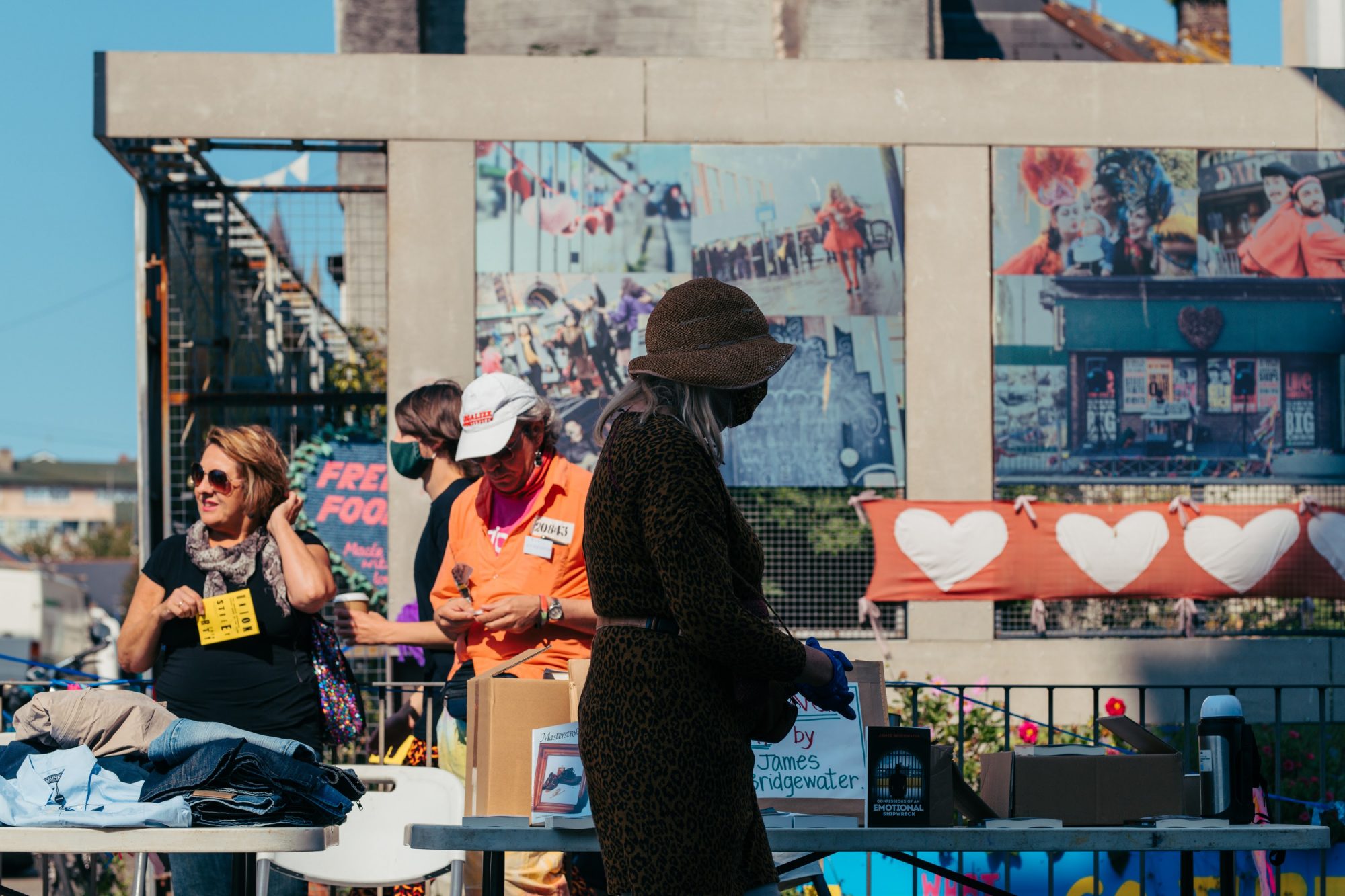
On Union Street in Plymouth that looks like 25% of vacant and dilapidated buildings being brought back into productive use by Nudge Community Builders. One of their buildings- C130, a former nightclub – spent ten years falling into disrepair. Recognising the impact on the community and the important place the building holds in local memory, Nudge took on the building.
Battling asbestos, water damage and holes in the roof they have made the building safe and open to the public. With help from the community, they renovated the front so the street feels nicer and moved in local businesses that can make productive use of the space while the community plans its long-term future, including hopes to retrofit affordable housing for young people. An urban mushroom farm is now thriving in the building’s damp basement, while a hydroponic grow space has taken up residence on the preserved dancefloor.
It’s one example of hope that we see reprinted up and down the country. In Poole, LGIM has worked with partners to reimagine the Dolphin Shopping Centre as a mixed-use destination with an NHS outpatient clinic. In Hendon, Sunderland, New Deal for Communities regeneration funding in the 2000s has been invested by Back on the Map in long term community-led regeneration, building a portfolio of 120 homes and £4.8 million of residential and commercial assets today.
But structural problems persist. This month saw a fresh blow to high streets across the country with court approval for the closure of up to 150 TG Jones stores (the brief reincarnation of WH Smith). It falls in the same month that marks ten years since the last British Home Stores closed its doors.
The TG Jones closures are the latest chapter in a long-term structural shift that has been reshaping high streets for decades. While each one brings fresh challenges for local economies and communities, they are symptoms of a retail-dominated model that is no longer capable of sustaining town centres.
Devolution changes the landscape
There is a renewed opportunity for high streets to change. Andy Burnham has said that Britain’s high streets should become “symbols of Britain’s renaissance”, rather than markers of continued decline. In his first week in office, he injected momentum to that commitment, announcing this week a 20% VAT cut for pubs, clubs and live music venues.
While business tax adjustments alone will not reverse decades of high street decline, the announcement is noteworthy in its focus on the places where people meet and participate in community life. Just as significantly, the measure does not target retail, marking a break from recent targeted relief for high street retailers. It reads as an acknowledgement that thriving places need more than economic activity; they need the spaces, institutions and businesses that enable connection.
That shift in thinking matters. For too long, debates about the high street have focused on coping with the challenges retail faces, rather than the wider role high streets play in people’s lives.
The civic high street starts from a different premise: that successful places combine economic and civic functions to create places that are resilient to market failure and better to live in.
Burnham’s wider thesis is that regeneration cannot be delivered from the centre and people need meaningful power over the places where they live. For high streets, this presents opportunities for new powers and investment to support place-based collaboration across the full range of organisations with a stake in their place. Local and regional authorities, public services, cultural organisations, high street developers and communities all have a role to play in shaping a shared vision for their high streets.
Devolution of power and investment can create the conditions for real change, but it will only succeed if power and investment reach all the way down into communities.
Community businesses are one institution that ensure that vision is directly connected to the community it serves. They put economic power directly into the hands of communities. Crucially, they work in partnership with local and regional authorities, services, anchor institutions and businesses. And they are accountable to local people.
By giving people a stake in the future of their high street, community businesses enable places not only to benefit from economic growth, but to shape it from the ground up.
The reward is local economies that work for people and place. More assets owned and stewarded by communities, wealth circulating locally, thriving civic high streets, and the social infrastructure that helps people connect, belong and live well.
The role of the Civic High Street Collective
The challenge facing the civic high street is no longer a lack of ideas or examples. There is a wealth of evidence and practice showing what is possible and the political window to new ideas is opening. What has been missing is a stronger connection between politics, policy and practice, to help bring forward change.
That is why we have launched the Civic High Street Collective. The Collective brings together people and organisations working to reshape high streets around a mixed-use, civic model that combines retail and hospitality with local services, culture, heritage, and housing.
The model reflects a broader ambition for good growth and a growing recognition that local economies are successful not simply when they generate economic activity, but when communities participate in and benefit from it.
Over the coming months, we will work with partners to develop the policy, funding and delivery models needed to help this approach scale, and ensure the civic high street becomes the norm rather than the exception.
The future high street is already emerging in places across the country. The task now is to accelerate it.
We’re still in listening mode. We want to ensure the Collective is as useful as possible for everyone working in this space. If you’re involved in reimagining high streets and town centres, we’d love to hear your views.


