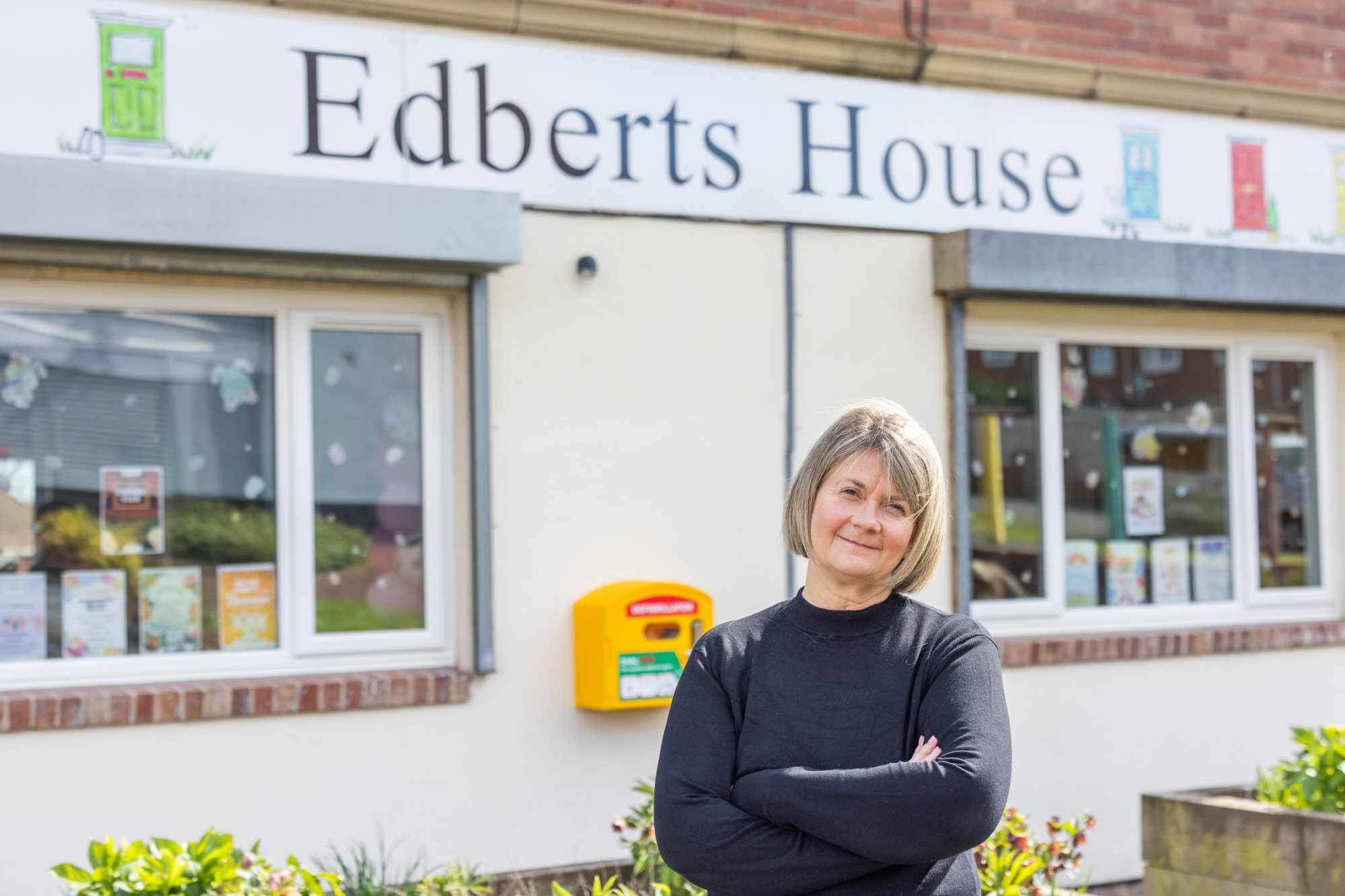
“Edberts is like my house but without the stress,” says one local resident. Edberts House sits right in the heart of the community on the High Lanes estate in Gateshead.
“We have tried to create an atmosphere that is like a house, not a community centre,” says Chief Executive Sarah Gorman. “There’s something much nicer about a more homely environment that you can walk to, in your slippers, that’s in the middle of your estate. We’re like extended family.”
The charity opened in 2009 to understand some of the prevalent issues in the community. “This area once had the highest levels of antisocial behavior in Gateshead,” explains Gorman. “There was a wonderful sense of community but people felt very disenfranchised. So we started to think: we don’t have to wait for others to come along and sort things out, we can create solutions for ourselves. To ask: how do we really enrich community life and start to address the cause of issues rather than the symptoms?”
The core values of Edberts House are ‘love, kindness, bravery, generosity, trust, equity and respect’, and they work across two key areas: community development and social prescribing, with all work aimed at improving health equity.
The charity works to bolster the health and wellbeing of the local community through community cohesion, advice and support, connecting people to the right services, as well as offering various groups and activities.
“We talk a lot about tea, toast, and time. That idea of someone just being able to come, get a cup of tea, and have someone to talk to if stuff is difficult. Houses like ours are a railing on the edge of the cliff. It’s really important for people that we’re here.”

After piloting a programme with a local GP surgery – where Edberts House placed a community worker within the surgery – they found that one in three patients visiting the GP did not have a clinical issue, but a social one. The combination of cuts, closures, and high levels of local deprivation had left many in the community struggling to know who, or where, to turn for help, support and connection.
People were facing a range of concerns spanning housing, financial, domestic or personal issues. “We’re trying to empower people to have more effective conversations about those issues,” says Gorman. “And stress the importance of listening to community voices.”
It’s this focus on looking at inequalities and health outcomes through the lens of prevention, community building and addressing social issues – also known as social prescribing – that has led to Edberts House being recognised for good practice by the Institute of Health Equity. The charity’s role as Social Prescribing Regional Learning Coordinator (North East) for NHS England and NHS Improvement has also been crucial in helping to embed and roll out social prescribing as a mainstream offer in primary care. The charity now operates four community houses, employs over 40 people, supports over 6,000 people a year, and works across 25 GP surgeries as well as in secondary care settings.
The impact has been significant. Not only has antisocial behaviour noticeably decreased in the area where they first started working back in 2009, but there’s been a tangible and positive effect on the lives of local people. “I was overwhelmed by it all, but now I’m so happy and I feel like I am starting my life again at 76,” says one member of the community supported by Edberts House. Doctors and other professionals are also celebrating the impact of their work.
“I feel very lucky to practice in an area where we have their support.”
The presence of Edberts House as a physical bedrock of the community, a literal next-door neighbour on the estate for many, continues to act as a vital lifeline. “We’re all on a journey in our lives and we have good seasons and bad seasons,” says Gorman. “And what people need to know is that we are here from them and we will walk shoulder to shoulder with them through those seasons.”