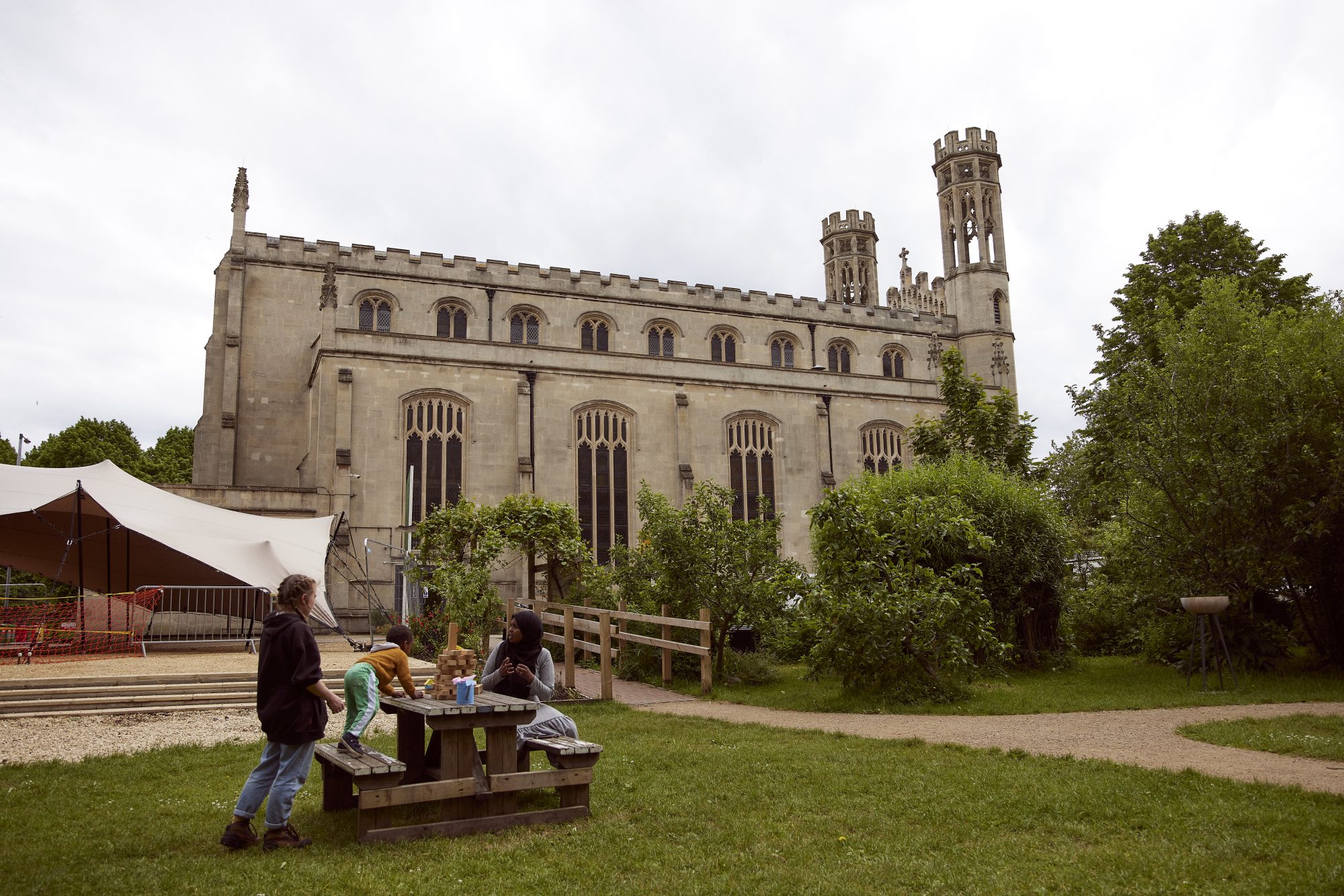

For communities who have watched valued buildings fall into disrepair, seen local services disappear, or tried to bring empty spaces on the high street back into use, the Community Right to Buy (CRTB) policy opens an important door. It gives communities a stronger route to step in, put assets into community hands, and build thriving neighbourhoods. The government’s announcement of an accompanying £61 million Pride in Place Community Right to Buy Fund is also a positive step, signalling recognition of the need for resources alongside rights.
But our latest Pulse Survey, carried out just before the government’s announcement (8th May – 5th June 2026), suggests the current offer isn’t strong enough. Community businesses support the principle of the CRTB and are excited by what it could make possible – but affordability and dedicated capacity building support are vital.
Our newly published report with Locality and funded by the Esmee Fairburn Foundation, ‘Keys to the future: How we build a new era of community ownership’, makes the same case. The CRTB can unlock a new era of community ownership and drive economic growth – for every £1 generated by asset-owning community organisations, around £2.50 is generated for the local economy. But this can only happen if backed by more substantial long-term funding, practical support and coordinated investment from government, funders, philanthropists and social investors.
Community businesses strongly support the principle of the CRTB
We’ve been tracking how community businesses feel about the Community Right to Buy. Awareness has grown quickly over the past year: in May 2026, 86% of community businesses we surveyed were aware of the policy, up from 62% in July 2025 and 72% in November 2025.
This growing awareness has been matched by cautious optimism. Just over half of community businesses feel positively about the potential of the CRTB to increase community asset ownership and support local regeneration and renewal. For many, this represents a long-awaited shift in who holds power over local decisions.
There is appetite to use the CRTB – but cost is holding communities back
Community businesses have real interest in using the Community Right to Buy. Almost a quarter of respondents (23%) say they would use it or are already looking at doing so:
“If the right spaces come available, we would seek to use this act. Lots of the spaces we want to develop are not already used by the community, but there is the opportunity that they could be.”
This reflects what we already know about the wider community ownership landscape. Demand is far outstripping supply: the Community Ownership Fund (COF) received around 3,800 eligible expressions of interest totalling £1.8 billion – more than 12 times the available funding amount. The CRTB will increase demand further, with a much wider range of assets potentially coming into scope. Conservatively, we anticipate 1,200 to 1,600 Asset of Community Value applications over the next 1-2 years under the CRTB.
The appetite is apparent, but affordability may be holding more communities back from a viable route to ownership. In our survey, the majority (63%) of community businesses told us they did not expect to use the CRTB, and/or did not think others in their community would use it – solely because of funding:
“We don’t have the funds and we would be surprised if others do.”
“The cost of acquiring the property at a commercial rate may be prohibitive for those seeking to buy it.”
This is why the government’s £61 million commitment is an important start, but it should be the beginning of a longer-term investment in community ownership. Our report calls for the government to increase total investment to £200 million, backed by £100 million of co-investment from trusts, foundations and philanthropy. If coordinated effectively by the Office for the Impact Economy, this could help unlock up to £1 billion of spending on community ownership over the next decade, matching the scale of opportunity.
Capacity building support is key
Several community businesses also told us they lack the knowledge, time or capacity to use the CRTB. Some were concerned the process would favour established organisations who have historically already received funding, have experience of asset management and can leverage partnership working.
In the COF’s early rounds, the fund did not include a dedicated support offer. When this was eventually corrected, groups receiving structured support were more than twice as likely to secure investment from the fund.
We’re therefore calling for a dedicated Community Ownership Support Engine, funded at five per cent of any total fund. This would bring together sector anchors and specialist expertise, offer practical support to groups and help ensure communities with lower capacity, especially those in disadvantaged areas, are not locked out of the opportunity to own important assets.
Community ownership pays back
Community-owned assets create local jobs and economic growth, restore social infrastructure, and provide spaces that local people need.
The Community Right to Buy gives us a chance to unlock more of this potential, but only if the government, funders, social investors and philanthropists match community ambition with adequate funding and support. The opportunity can’t be missed.
Power to Change will continue to track community businesses’ views as the Community Right to Buy is implemented and as funding becomes available.


