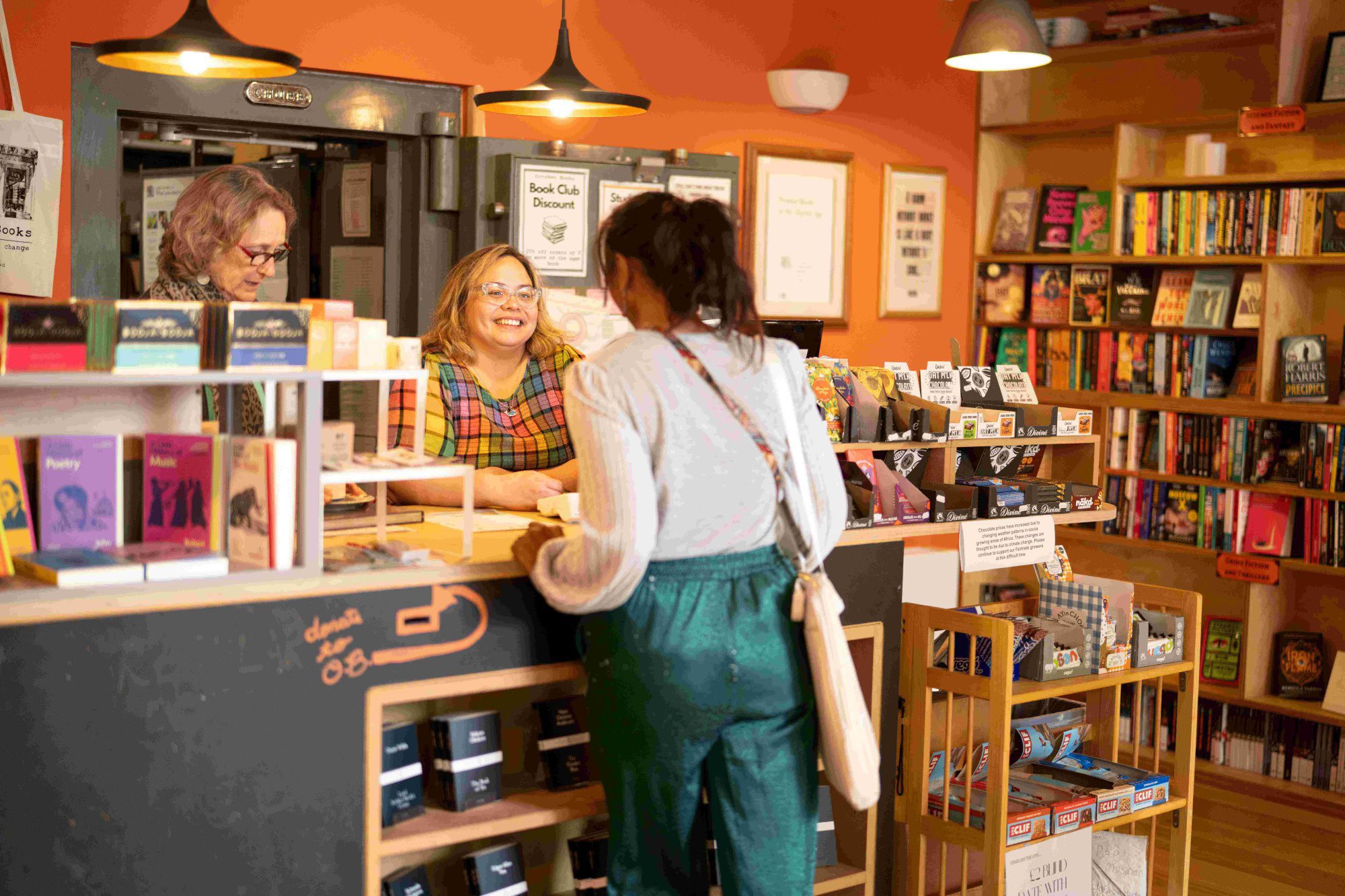
October Books is no ordinary bookshop. Many of the original supporters continue to contribute to October Books and other local community initiatives to this day, and this innovative space offers an independent place in the local community to meet and form connections, while giving a voice to people of all backgrounds.
October Books was established at a time of growing marginalisation of minority groups, the gay liberation and rights movement and the feminist movement. They specialise in social issues, feminism, gender studies, humanities, and political issues, alongside their trade in general popular fiction, non-fiction, and children’s books. These core values and topics have remained central to the ethos of the business throughout its 48 year history.
One of the things I love is hearing people meet in the space, who haven’t seen one another for ages. They knew each other from Greenham Common or Glastonbury festival, or some other activism.
A space for connection amid decline
The team successfully operated in Bevois Valley between 1977 – 2003, however, surrounding businesses closed amid difficult rental conditions. The challenges were further heightened by a lack of investment in the area resulting in decline and impacting the viability of future trade. Therefore, in 2003, the store relocated just a few short miles to Portswood to rented premises, a workable site on a vibrant high street.
Located within just two miles of Southampton’s ports, industrial hubs and two major universities, Portswood is home to a diverse population from students and academics, people from ethnically diverse backgrounds to a historically working-class community rooted in dockside employment. October Books plays an important role in serving this community. It brings together many groups – including The Southampton Area Co-operative development agency, Woodcraft folk group, the Black History Society, LGBTQ+ authors, Southampton Climate Action Network, and Southampton University Comedy Club – building connection and collaboration. The bookshop also enjoys a strong reciprocal relationship with both local private businesses and its high street neighbours.
As their operations continued to expand, it became clear the local community wanted and needed more space to gather and engage with one another beyond a community-focused retail offering. Guided by this, October Books started to look for new a new site with more capacity to host community gatherings and interactive events. And in 2018, a former NatWest Bank building became available less than 100 metres away, right at the beating heart of the high street.
This new site cost £380,000, funded by a loan from Co-op and Community Finance and over £300,000 raised in community loan stock, maturing at one, five, and ten years. Renovations required an additional £140,000, partly covered by selling the upper floor to The Society of St James. While this finance allowed October Books to buy the site, it came with significant loan-stock maturity repayments due at the five and ten year anniversaries (2023 and 2028). Knowing that as much as £259,000 of loan-stock was due to be repaid in 2023, the team decided to run a community share offer.
October Books consulted with members of the local community, Coop and Community Finance and some of the initial local investors within the community. They then successfully applied to Power to Change’s Booster programme for support through blended finance with community shares – initially securing £7,100 for the establishment of a share offer, and a subsequent £31,000 in a second round of community shares.
We couldn’t have done it without Power to Change’s support because of the additional needs for not just the money, but a clear business plan, predictive finance, and planning out lots of different scenarios going forward. We just didn’t have the time and resources to do this extra work when we’re such a small team.
Building community
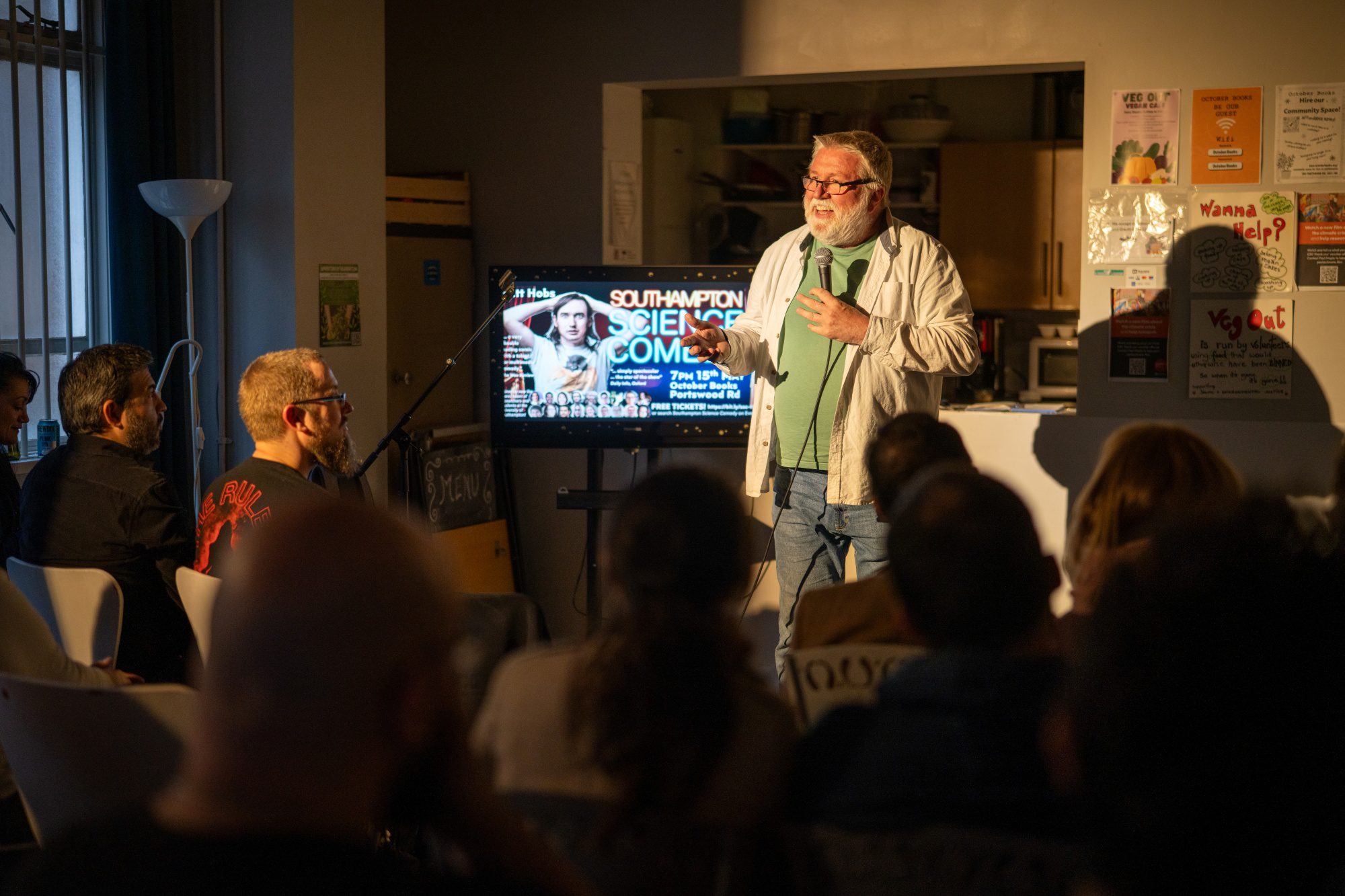
At the front of the new store, October Books welcomes its customers selling books, gifts, stationery, wholefood, organic drinks and eco-friendly cleaning products. As you make your way through the store, you’ll find several small creative and private spaces to hire and host a variety of community events and services. These include local councillor surgeries, book and comedy clubs, counselling sessions, poetry workshops, yoga classes, English language lessons, school visits, Climate Action Network gatherings, community consultations and much more. At the rear of the site, there’s a patio community garden offering a space for people to enjoy and connect.
October Books plays a key role within the local community where individuals are customers, contributors, members and even organisational leaders – similar to Clare Diaper – once a number one bestseller in October Books and now the Strategic Team Lead for the bookshop.
“I was really excited about the new role and could see a future where October Books was really connected and embedded in the community again, with a regular events programme, volunteers helping out in all aspects of the business while maintaining the radical roots of the organisation and ensuring it was a place where everyone felt welcome.” – Claire Diaper
The bookshop is run by a team of young and experienced staff, members, and 30-40 volunteers who provide support and input from marketing to cleaning and gardening.
Resilience and renewal
October Books’ retail offering continues to attract the local community and visitors who share its values. However, the difficulties brought on by the pandemic and rising costs—from the National Living Wage and National Insurance employer contributions to soaring utility bills—have increased pressure on the business. Despite the challenges, October Books have shown remarkable resilience. Owning their premises gives them a solid foundation to weather these economic shifts and remain a high street fixture.
Being rooted in the community and the strong local networks they’ve built are among their strengths – they are a visible and long-standing community hub in a busy suburb. Often Portswood councillors hold their surgeries at October Books, giving local democratic accountability a community centred home.
Locally led change
One of the secrets to the team’s success lies in their founding values – providing a community-led space for engagement and dialogue around civic initiatives and issues. For 48 years, they’ve provided an important outlet for local voices, and they remain committed to the values and ingredients that shaped their journey.
Today, Portswood high street is undergoing significant change, with redevelopment and a new ‘bus-gate’ pilot project introduced by Southampton City Council to improve active travel and the use of public transport. The pilot project’s aim is to speed up the flow of people through Portswood and into the city centre. Similar dynamics and ambitions can be seen across many high streets, particularly where suburban areas serve as key arteries connecting to the heart of city centres.
However, local residents feel the infrastructure changes to the high street and surrounding residential areas have been imposed without genuine community consultation, and enough consideration of the community’s wishes. This had led to petitions, protests and calls for accountability from the city’s leadership. The scheme is now paused, with future action to be decided by the Steering Group that includes October Books.
Although October Books was used as a site for consultation forums by the local council in the run up to implementation of the pilot, the team felt there was a missed opportunity to ‘reimagine’ Portswood through a community-led and place-making lens.
“I’ve been involved in other community projects across the city and the starting point should always be where the community is at, not ‘we have this proposal and what do you think?’. The October Books new story started with the question ‘what is a radical bookshop in the 21st century?’. The community let us know and we then responded. Their collective wisdom and support set the direction.” – Clare Diaper, Strategic Lead, October Books.
The team hopes this experience can be an opportunity for learning for all stakeholders – that positive change can happen when it’s inclusive, locally driven and designed with community.